
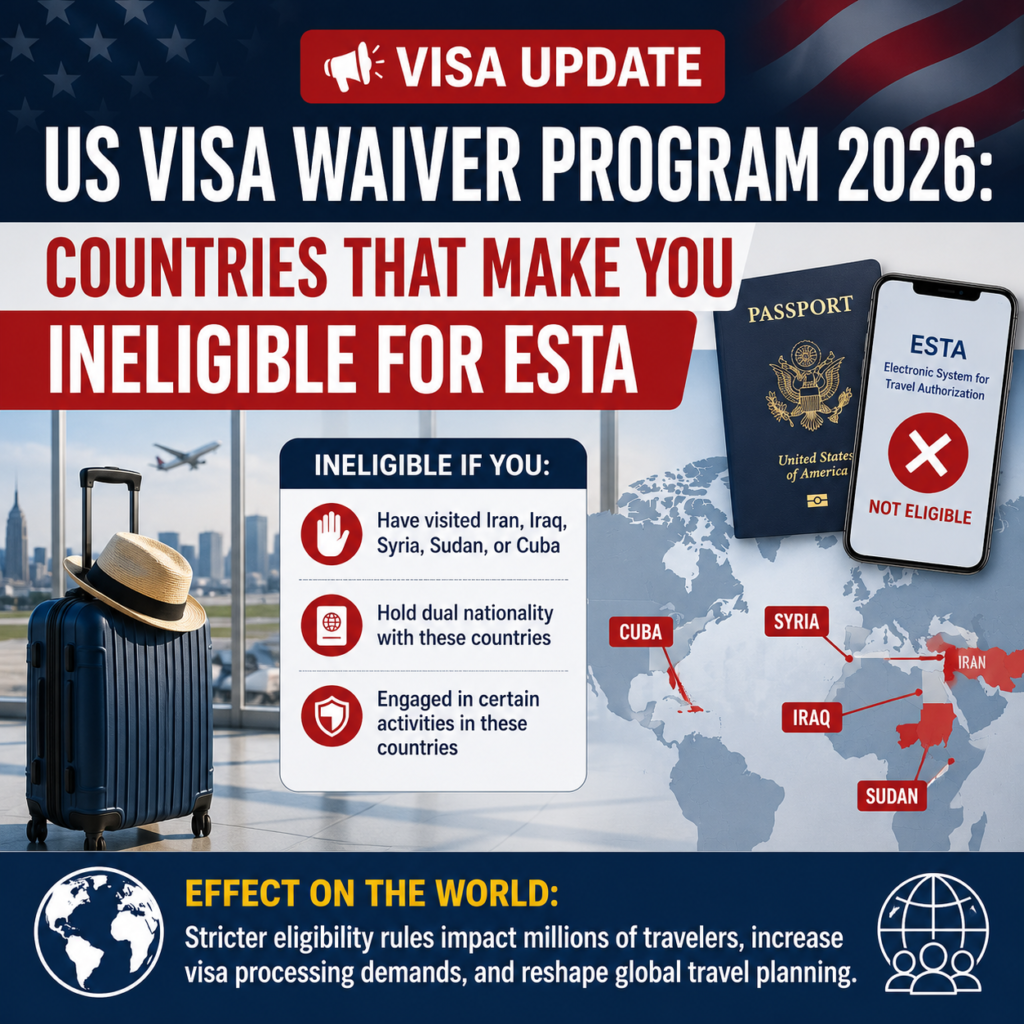
Significant information for foreign visitors, the United States has formally changed its Visa Waiver Program (VWP) to confirm that those who have been to or possess dual nationality with some nations are no longer qualified for visa-free admission.
Millions of visitors from participating nations who have become used to visa-free travel to the U.S. will find this to be a major change. This is what you should know.
What Exactly Is the Visa Waiver Programme?
Under the Visa Waiver Program, most citizens of participating countries are able to enter United States for business or pleasure for up to 90 days without needing either a regular visa. Prior to departure, eligible travelers must obtain authorization through ESTA.
What Changes Has Had?
The 2015 updated guidelines are now publicly announced. The long-standing Visa Waiver Program Improvement and Terrorist Travel Prevention Act still applies to all visa free entry eligible personal.
Two groups of visitors now ineligible for visa-free travel under the new explanation are:
Category 1: Travel History to Particular Nations
Nationals of VWP-eligible countries who have visited or been physically present in any of the following countries on or after March 1, 2011 must now apply for a complete U.S. visa:
- North Korea
- Iran
- Iraq
- Libya
- Somalia
- Sudan
- Syria
- Yemen
Additionally, entry without a visa is strictly banned for anyone visitor or was present in Cuba on or after January 12, 2021.
Category 2: Dual Citizenship
Regardless of which passport they plan to travel on, citizens of VWP-participating nations who also have legitimate citizenship or dual nationality with any of the following countries are entirely ineligible for an ESTA waiver:
- Cuba
- North Korea
- Iran
- Iraq
- Sudan
- Syria
On whom does this affect?
For many visitors, this is where things get personal. If you fit either of the above groups, the revised advice means that you must seek for a regular Visitor (B) Visa via a U.S. embassy or consulate before travel even if you hold a passport from a major Visa Waiver Program country, like the United Kingdom, Japan, or an EU member state.
For instance:
- British people who traveled to Iran for pleasure in 2015 must now need for a visa.
- ESTA is not available for any Japanese citizen who also holding Iranian nationality.
- Any German tourist who visited Cuba in 2022 cannot utilize visa-free travel.
Are There Any Exceptions?
Individuals who traveled to these nations mostly for diplomatic or military service for a VWP-member government have some exceptions. The normal visa application applies for everyone else.
What Eligible Passengers Should Do
Nothing has altered for those who still qualify completely for the program. You still have to:
- Get proper ESTA clearance before you leave
- Maintain a biometric e‑passport
- For pleasure or business travel, limit your stay to a maximum of 90 days.
- Satisfy all further program criteria

The Final Result
The revised guidance from the American government reminds us that rules for travel abroad are anything but fixed. One trip to a forbidden nation, even years ago, or having dual nationality can significantly affect your entrance into the United States.
Before you reserve that flight, thoroughly review your citizenship status and travel history. Travel without a visa could not be appropriate for you; finding that at the airport is the last thing any passenger would want.
Washington’s message is unequivocal: know before you go.