
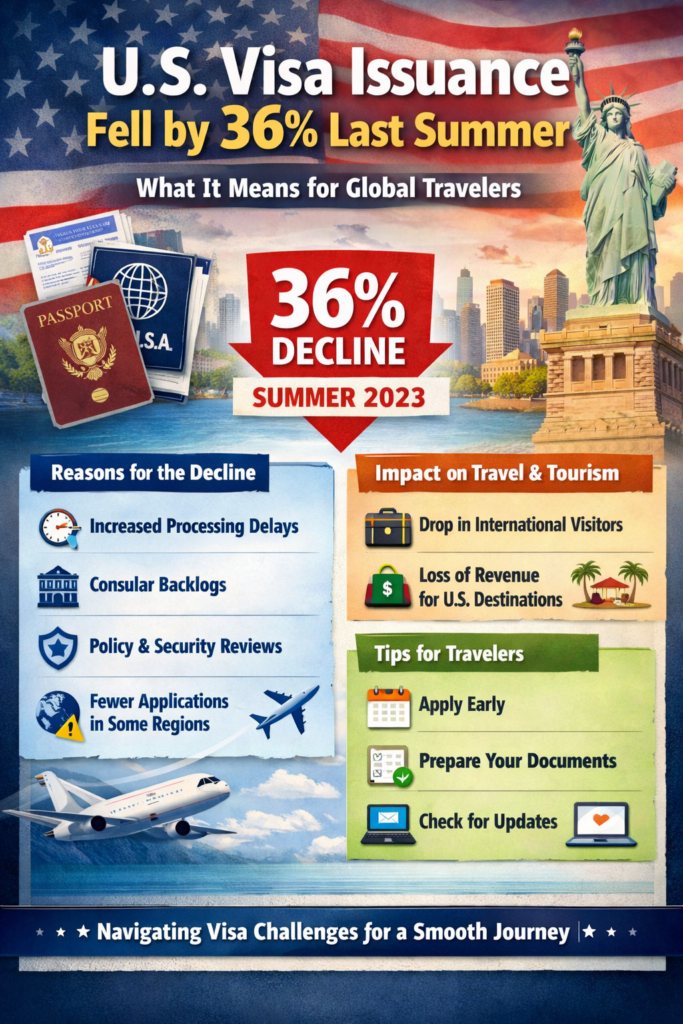
In a surprising shift for international travel, the United States experienced a significant decline in visa issuance during the summer season, with numbers dropping by nearly 36% compared to previous years. The decline has sparked discussions among travel experts, immigration analysts, and tourism businesses about what this trend means for travelers planning to visit the U.S. in the coming years.
A Sharp Drop in Visa Approvals
According to recent immigration data released by the U.S. Department of State, visa issuance across several categories—including tourist and business visas—fell dramatically during the summer months. The decrease affected many applicants seeking the widely used B‑1/B‑2 Visitor Visa, which allows foreign nationals to travel to the United States for tourism, family visits, and short-term business activities.
Experts say that while seasonal fluctuations are normal, a 36% decline represents one of the most notable drops in recent years.
Why Did Visa Issuance Decline?
Several factors contributed to the reduction in visas issued last summer:
1. Increased Administrative Processing
Many visa applications required additional background checks and administrative reviews. This extra scrutiny slowed down processing times and reduced the number of approvals during peak travel months.
2. Consular Backlogs
Although visa processing improved after pandemic-related disruptions, some U.S. embassies and consulates still faced appointment shortages and application backlogs.
3. Policy and Security Reviews
Visa adjudication policies and security assessments periodically tighten, especially during periods when immigration policies are being reviewed or updated.
4. Declining Application Numbers in Some Regions
In some countries, fewer applicants submitted visa requests due to long wait times, travel costs, or uncertainty about approval chances.
Impact on Tourism and Travel
The decline in visa issuance could have long-term implications for the U.S. travel and tourism industry. International visitors contribute billions of dollars annually to the American economy through tourism, education, and business travel.
Industry organizations such as the U.S. Travel Association have repeatedly highlighted the importance of efficient visa processing to maintain the country’s competitiveness as a global travel destination.
Popular destinations such as New York City, Los Angeles, and Orlando depend heavily on international visitors, particularly during the summer travel season.
What Travelers Should Expect in 2026
Despite the decline last summer, immigration experts believe visa issuance may gradually stabilize as U.S. consulates increase staffing and improve processing systems.
Travelers planning to visit the United States should consider the following tips:
- Apply early to avoid appointment shortages.
- Prepare complete documentation to minimize administrative delays.
- Monitor embassy updates for the latest visa processing timelines.
Many embassies are also expanding interview waiver programs and digital appointment systems to reduce waiting times.
The Bigger Picture
The 36% drop in visa issuance highlights how visa policies and processing efficiency directly influence global mobility. For millions of travelers worldwide, the ability to obtain a visa quickly determines whether they can attend conferences, reunite with family, pursue education, or simply explore new destinations.
As global travel continues to recover and demand rises, improvements in visa processing will be crucial for maintaining the United States as one of the world’s most visited destinations.
Conclusion
The decline in U.S. visa issuance last summer signals an important shift in international travel patterns. While temporary processing challenges and policy reviews may explain the drop, travelers and tourism stakeholders will be watching closely to see how visa processing evolves in the coming months.
For those planning a trip to the United States, early preparation and staying informed about visa policy updates will remain key to a smooth travel experience.