
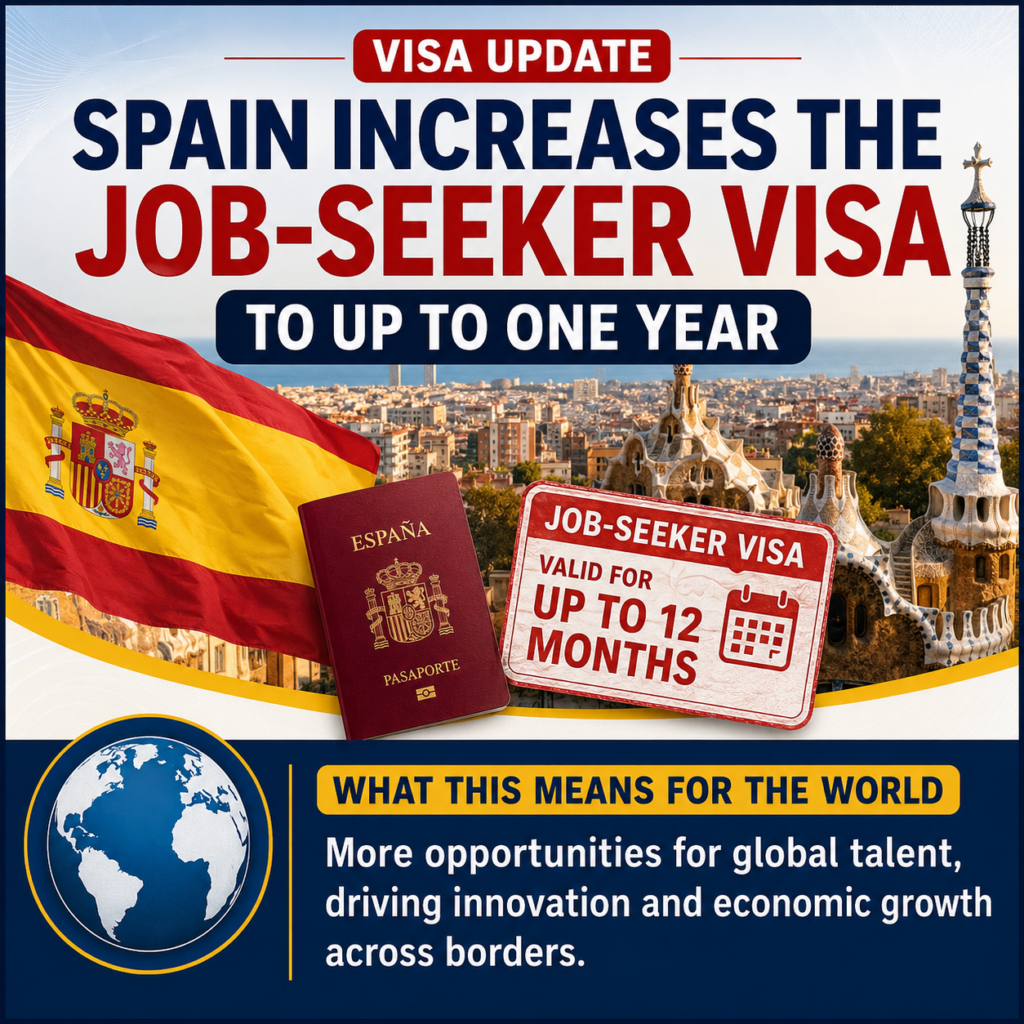
Spain has revised one of the more neglected areas of its immigration system, and the move is a major one for anyone trying to develop a career there. The country’s job-seeker visa, which was previously only valid for three months, now allows eligible applicants to remain in Spain for up to 12 months while seeking employment, according to Real Decreto 1155/2024. For many young professionals, it quadruples their breathing room and transforms a frantic rush into something more like a genuine job search.
From a Ticking Clock to a Real Runway
Anyone who has tried to job search in a new nation understands how taxing a short deadline might be. Three months is hardly enough time to get your bearings, find a local phone number and bank account, translate your resume into Spanish, and begin going to interviews, let alone actually secure an offer and complete the paperwork before your legal stay expires. Pressure forced many qualified candidates to give up Spain totally and seek employment elsewhere in Europe.
The protracted 12-month period totally alters the arithmetic. Instead of being in a panic, job seekers now have time to properly network, go thru multiple rounds of interviews, weigh competing offers, and even move at a reasonable pace. Spain is gambling that allowing individuals room to breathe will result in improved job matches and, ultimately, more people remaining and contributing to the economy long-term.
Who Really Qualifies?
This is where the fine print counts. The reform is not a catch-all open to anyone come to Spain and look for employment visa. It’s mostly meant to be a bridge for international graduates, those who finished their education in Spain or sometimes another EU country and wish to move from a student visa into employment.
Applicants usually have to apply a few months after graduating, and consulates often prefer those who studied recently over those who did so years ago.
There is also a practical problem for 2026: under the government’s Orden GECCO system, consular quotas have restricted access for candidates from outside Spain. In essence, this implies that general candidates attempting to obtain the visa straight from their home country confront more limitations this year, while students currently residing in Spain on a study permit have a simpler route since they can switch without ever visiting a consulate.
Anyone contemplating the extremely skilled or specialized professional path may discover that substitute visas, like the Highly Skilled Professional Visa or the Digital Nomad Visa, are a more practical alternative under the existing legislation.
Part of an Extensive Immigration Reform
This visa change did not happen in isolation. Quietly for the last few years, Spain has been changing its immigration policy to deal with a labor market lacking in construction, hotel, healthcare, and technology workers, even as unemployment in some areas remains stubbornly excessive.
The three pillars of the larger legislative initiative are training, employment, and family reunification, according to Migration Minister Elma Saiz. In addition to extending the job-seeker visa Spain is also making it possible for hundreds of thousands of people who are living in the country without papers to become residents. The plan is to give residency and the right to work to around 300,000 people each year until 2027. These actions all demonstrate the government’s efforts to increase the size and officialness of the workforce. This goes beyond simply tightening the borders. This is a way of handling immigration compared to how other nearby countries are dealing with the same issue.
If You’re Thinking of Moving, What Does This Mean?
Some common sense things to remember are important if you are thinking about taking this route. The fees to apply usually cost between €75 and €150 though the exact amount is different, at each consulate and the application fees can change over time. It is always wise to double-check the local figure. Usually needed are an apostilled and formally translated clean criminal record check spanning the previous five years as well as a medical certificate certifying you don’t present a public health risk. The timing also matters; waiting too long after graduation to apply might reduce your chances since the visa is meant for those actively moving from education to job search.
Employers should also find the change worth keeping an eye on. A longer job-seeker window provides Spanish businesses greater leeway to scout early-career foreign talent free from the pressure of an immediate hire, perhaps combining it with quicker moving work visas once a prospect is found.
The Bottom Line
Spain’s choice to increase the validity of its job-seeker visa by four times shows a more general awareness that it just takes time to locate the ideal job and employer. That additional runway may be the deciding factor for overseas grads hoping to establish a career in Spain between abandoning and discovering a location.
But like with any immigration program, the specifics of eligibility and consular access are changing, so anybody considering this route should check latest criteria straight with a Spanish consulate or a competent immigration counsellor before making plans.
For More Information contact with the local / regional embassy in your country of residence.See More