
What pilgrims should know about Saudi Arabia’s new one-year multiple-entry Umrah visa
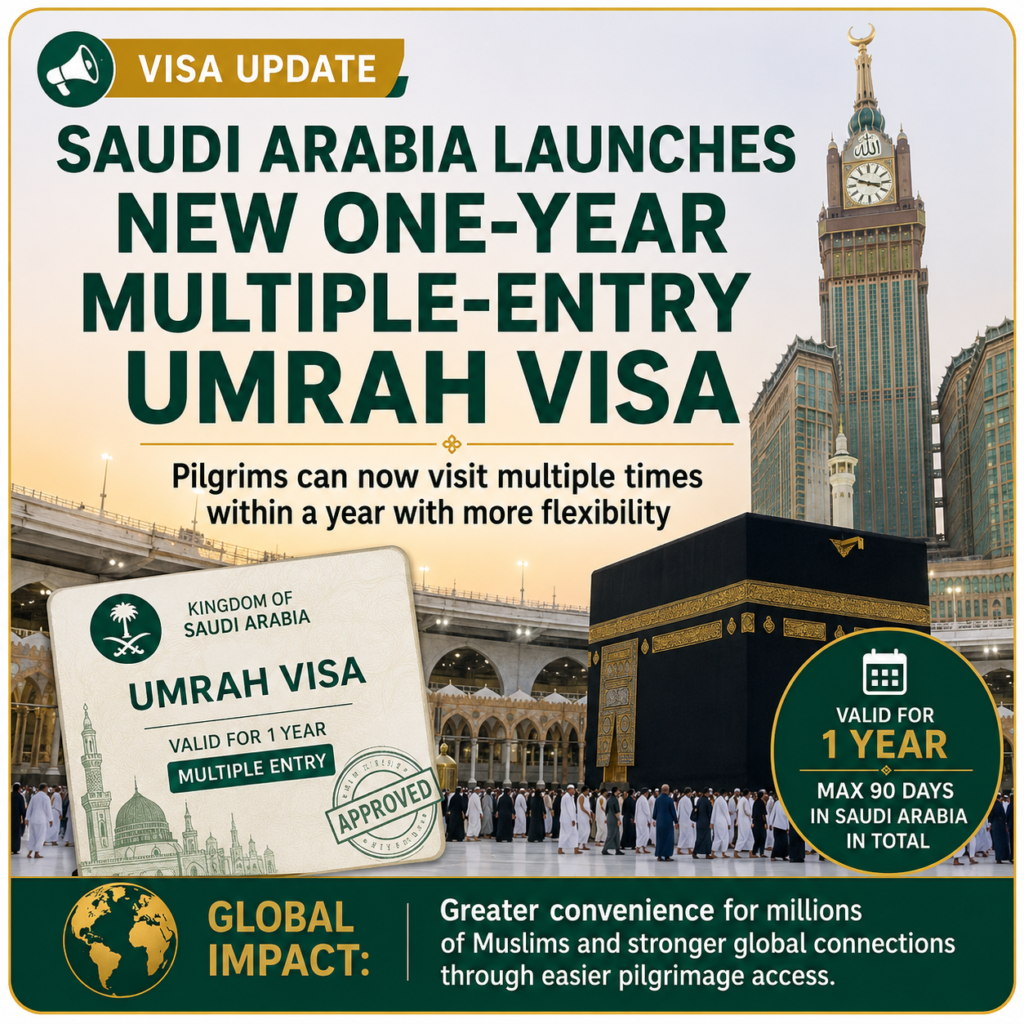
Umrah is not just a trip, but genuinely personal worship for millions of Muslims worldwide. What is the significance of this. Until recently, the documentation supporting pilgrimage wasn’t always as flexible as some people believed. That’s undergoing change right now. One of the more major changes in pilgrimage legislation in recent years is the new multiple-entry Umrah visa launched by Saudi Arabia’s Ministry of Hajj and Umrah.
What Has Changed Exactly?
Most Umrah visas in the past permitted one stay of about three months before expiring. The new technology takes the place of that paradigm totally. Pilgrims may now get a visa that remains valid for a complete 365 days from the day of issuance. During that year, they are free to enter and depart the Kingdom numerous times instead of being constrained to one continuous visit.
Although it’s a generous one, there is a limit: visa holders may only spend a total of 90 days in Saudi Arabia over all of their visits throughout the year. Crucially, this is a total allowance rather than 90 days per journey. Thus, three weeks spent in the Kingdom on one visit will be subtracted from an individual’s total 90-day balance, leaving the remaining period available for future travel within the same 12-month period.
The Real Working of the Process
The visa itself does not provide automatic entry each time another person wishes to travel. Every pilgrimage requires pilgrims to still buy an authorised service package via Nusuk, the official Kingdom’s internet portal for Umrah reservations. This bundle has to be put together before leaving, and its length cannot be greater than the number of days left on the pilgrim’s 90-day limit.
Furthermore, visitors have to obtain a different Umrah permission using the Nusuk application in advance of each visit. The visa is essentially turned off once someone leaves Saudi Arabia; it does not just sit there idly between travels. The traveler must first complete the required steps, reserving a new package and obtaining a new permission, before it reactivates for a subsequent visit. In essence, this means that the one-year validity is not a free-for-all; rather, it is a renewable framework that still calls for some forethought before each trip.
One obvious exception needs to be mentioned. The Hajj season, which is defined by authorities as spanning from the first day of Dhu Al-Qi’dah to the 13th of December, prevents the use of this multi-entry visa to enter the country. The Hajj visa process is unique for those who plan to travel to and visit Umrah, resulting in the need to go through the separate procedure.
Why the Kingdom Is Moving This Way
This is not a single change in policy; it forms part of a larger scheme. The transformation is a component of the Pilgrim Experience Program, an effort under Saudi Vision 2030 aimed at streamlining the logistics of religious travel and simplifying the Kingdom’s accessibility for spiritual objectives. While diversifying its economy away from oil reliance, Saudi authorities have been patiently aiming to establish the nation as a more welcoming center for religious travel.
It’s also worth remembering this is not the first relaxing of restrictions in recent years. In a similar fashion, Gulf nationals and residents were authorized to conduct Umrah at any time of the year just last year.These measures are really about a few things, making things easier for people making it simpler for them to visit often and letting the digital Nusuk platform do a lot of the work that agents or intermediaries used to do.
What This Means, for Pilgrims
This is a rather practical improvement for regular visitors: families with relatives in the Kingdom, professionals who visit sometimes, or devout Muslims who just want to conduct Umrah more than once a year. Eligible pilgrims may now organize numerous visits under one authorized visa, provided they keep within the 90-day cumulative restriction and properly reserve service packages through Nusuk, so avoiding applying for a new visa every few months.
Still, the system does need some planning. Pilgrims organizing several visits within the year will need to keep a close eye on how many days they’ve already used since each trip calls for its own service package and Umrah permission and since the leftover day-balance has to be monitored strictly. Working with a reliable, Nusuk-accredited service provider makes this much simpler, since these companies are aware of the most recent regulations and may assist in avoiding scheduling problems, particularly during the Hajj season blackout period.
The Bottom Line
The change in Saudi Arabia to a one-year entry Umrah visa is a big deal. It is part of an effort to make religious travel better and to make the pilgrimage experience easier. Every single trip to Saudi Arabia for Umrah still has rules that people need to follow. Now the Umrah visa is more flexible than it was before. This means that people going to Saudi Arabia for Umrah have options and can plan their trips to Saudi Arabia for Umrah in a way that works better for them. The new Umrah visa is a thing, for people who want to visit Saudi Arabia for Umrah. Anyone intending to visit the Kingdom more than once for Umrah in the upcoming year should carefully consider this new visa arrangement before making their first trip.