
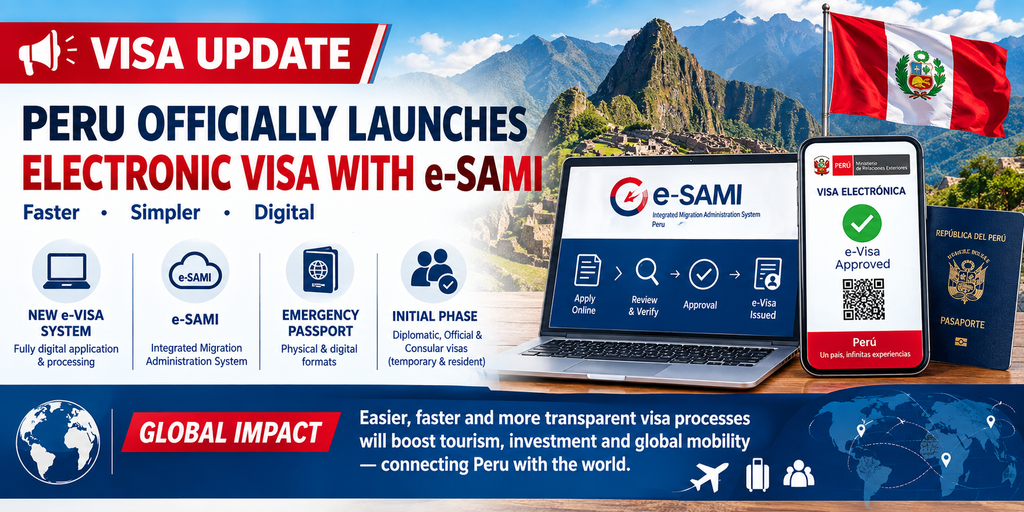
Peru has entered the digital era of immigration services in a meaningful way. The Ministry of Foreign Affairs of Peru announced its awaited, Peru digital visa system, on August 24 2026. The announcement also introduced a digital infrastructure called e‑SAMI, which stands for Integrated Migration Administration System. Foreign Ministry made this announcement at Limas Torre Tagle Palace. This news represents one of the changes to Peru’s consular system in recent memory and the electronic visa system will simplify travel, for many people.
What Is e-SAMI Specifically?
Essentially e‑SAMI is a digital platform that handles the entire life cycle of Peruvian visa applications. E‑SAMI takes care of submission, document review, approval and issuance and lets candidates avoid visiting a consulate for each step. With financial support, from the Inter‑American Development Bank (IDB) e‑SAMI was built. The IDB provided not only funding but also knowledge in system design and institution building.
E-SAMI is not a standalone tool, it serves as the administrative engine driving Peru’s larger digital transformation of consular services. It takes the place of a previous, more fragmented system that relied heavily on manual processing and in-person paperwork, which frequently resulted in lengthy wait times and little openness for candidates residing abroad.
A Package Deal: Visas and Emergency Passports Together
The electronic visa was not introduced alone, interestingly enough. Intended for Peruvian nationals who find themselves in critical circumstances while traveling or living abroad, the same ceremony debuted a new emergency passport, offered in both physical and digital forms. Combining these two projects points to Peru’s Foreign Ministry’s holistic approach to modernizing citizen services rather than addressing issues individually.
This two-stage introduction points to a larger credo: consular modernization is about more than only visas for foreign tourists entering Peru; it also entails simplifying life for Peruvians negotiating bureaucratic crises overseas.
Who Gains First?
It’s crucial to remember that this is not a system that will immediately alter things for every visitor. Direct electronic issuance via e-SAMI is restricted in its early stages to three particular visa types: diplomatic, official, and consular visas spanning both temporary and resident status. These groups usually include government employees, diplomatic staff, and people with formal institutional connections, instead of including the typical tourist or digital nomad holders.
For tourists, especially visitors, from visa‑exempt countries nothing changes in how things work. If you have been able to visit Peru without a visa Peru rule still applies today. If you were able to visit Peru without a visa in the past, that still holds true now. Short-term visitors who never required a visa in the first place are not impacted by the electronic system’s entrance criteria.
Those seeking a devoted remote-work visa route or a totally digital tourist visa will have to wait a little longer. Peruvian officials have said that more visa categories will be introduced gradually and grow by region, but no clear date has been given for when e-visas for tourists or digital nomads might be available.
Why This Matters for Peru’s Global Image
Beyond its technical specifics, this launch represents an increasing regional trend across Latin America where governments are competing to digitize immigration and consular services to remain competitive for tourism, investment, and skilled emigration. Countries that provide faster, simpler visa procedures usually have an advantage in attracting Business tourists, Business, and international talent.
Peru is indicating that it wants to shed the image of sluggish, paperwork-intensive bureaucracy that has historically irritated both foreign applicants and Peruvian expats by investing in a system like e-SAMI. Better traceability and automated case tracking could also help cut down on chances for middlemen or unlicensed “expediters” who have in the past filled in gaps left by poorly run manual systems.
What Candidates and Passengers Should Do Now
If you fit one of the first three visa categories, diplomatic, official, or consular, you should contact your neighborhood Peruvian consulate or the Ministry of Foreign Affairs’ official channels to find out how the new digital system applies to your particular situation. Official announcements should be watched for everyone else as the rollout is projected to spread over time.
Since this is a phased rollout, information on certain paperwork needs, processing timelines, and eligibility can keep changing. Anyone with an immediate need for a Peruvian visa should check present criteria straight from official government sources instead of depending just on unofficial information as processes during a transitional period like this might change fast.
Looking Forward
Though still early in development, Peru’s turn toward electronic visa processing and the basis being developed with e-SAMI could transform how the nation manages both routine and emergency consular issues for years to come. Peru may be among the more modern South American countries in terms of digital governance as more visa types become available and the system matures; this would help diplomats, expatriates, and finally regular tourists as well.
For more Information contact your country regional embassy !