
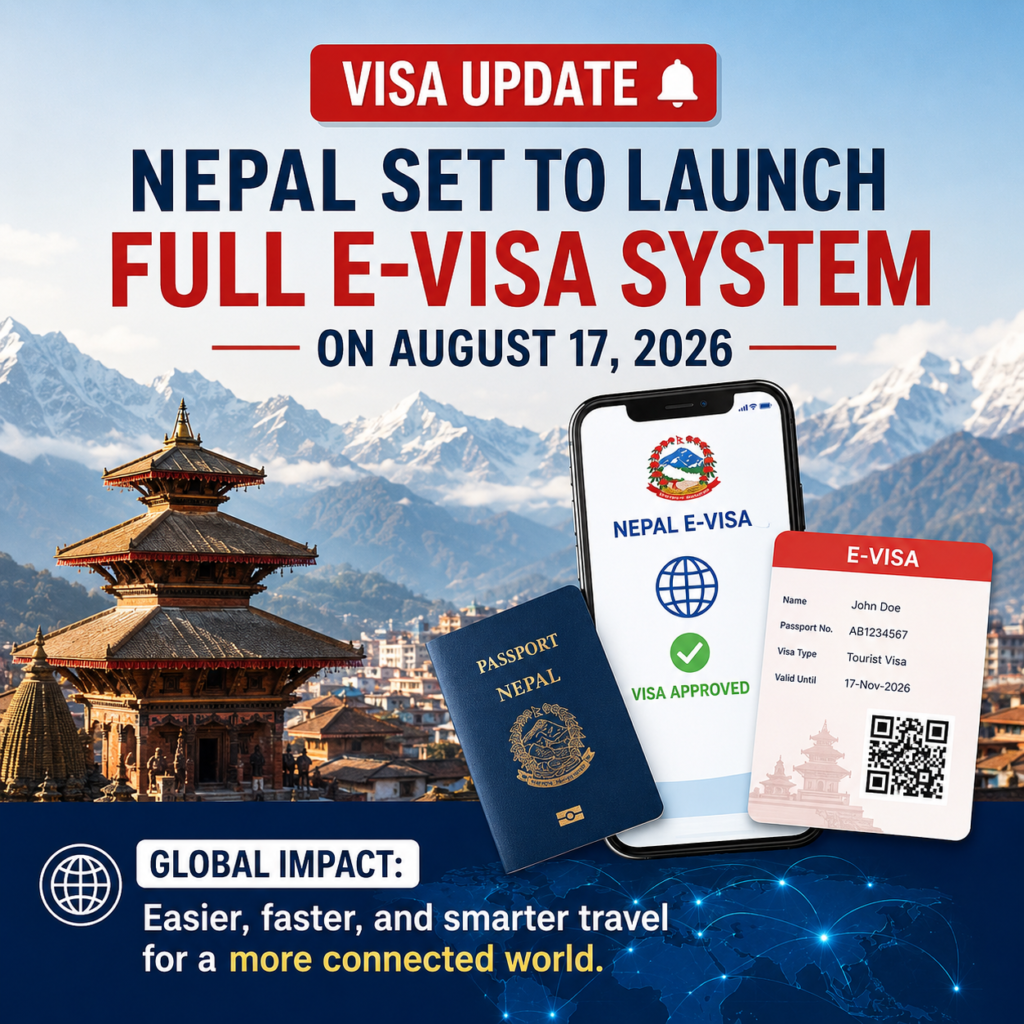
Nepal’s e-Visa system launches August 17, 2026. Apply online in ~24 hours, skip arrival lines. Prices: $30 (15 days), $50 (30 days), $125 (90 days). Visa-on-arrival still available.
Nepal is getting ready to make a major move toward modernizing its entry system. The e-Visa system for the nation will go completely into effect on August 17, 2026, enabling foreign visitors to obtain their travel permission electronically prior to their arrival. Although this represents a significant change in Nepal’s approach to handling visitor arrivals, officials have made it clear that it is not the end of the road for the conventional visa-on-arrival system, at least not yet.
What’s Changing
Spokesperson for Nepal’s Department of Immigration, Tikaram Dhakal verified that the technical preparation for the new system is finished. Before the formal release, testing was utilized to identify and resolve flaws, and the division seems sure the technology is ready for practical application.
The e-Visa’s main premise is straightforward: you may apply from home, get accepted digitally, and have your visa sent right to your email instead of arriving in Nepal and waiting for a physical visa sticker to be printed and attached to your passport. From there, travelers merely need to print the document and bring it with them, first for airline check-in and then once more for the immigration desk upon arrival.
The Mechanism of the Application
The procedure is carried out through Nepal’s official website,
nepaliport-new.immigration.gov.np.
Applicants will have to provide typical information: personal details, passport data, planned travel dates, and their lodging in Nepal. The necessary paperwork are completed with a passport scan and a current photo.
According to Dhakal, most applications are examined in about 24 hours after being submitted and paid for online. For tourists especially, the Department of Immigration expects this move to lower expenses on the administrative side, lessen paperwork, and shorten the lines that have traditionally developed at Nepal’s entry sites during high travel seasons.
Types of Visas and Costs
On its website, the Department of Immigration has posted information regarding its ETA/eVisa choice. Three durations are offered for several entry tourist visas:
- 15 days — $30
- 30 days — $50
- 90 days – $125
Online credit or debit card payments are managed; upon issuance, the visa must be utilized within six months of its approval date. Rather than totally replacing the electronic approvals that Nepalese embassies and consulates have been granting for years, this new direct application channel runs next to them.
There are also exemptions you should be aware of. Except for U.S. residents, children under ten can obtain a free visa for visits up to thirty days. One free 30-day visa per calendar year is available to citizens of SAARC member nations. Afghan nationals continue to undergo a distinct approval procedure requiring a recommendation from the Department of Immigration, while those possessing Nepal’s Non-Resident Nepali (NRN) card are totally free from visa payments.
Visa-on-Arrival Is Not Going Away Yet
Although the rollout of e-Visa has been exciting, Nepal still has no plans to withdraw the availability of visas-on-arrival for most visitors. Official immigration website reports that only 12 countries’ citizens are now unable to obtain a visa at the border, which includes Afghanistan and other nations. Travelers from these nations have to submit their applications ahead of time via a Nepalese embassy or the consular website.
Everybody else may still arrive at Tribhuvan International Airport in Kathmandu or another approved entry point and obtain a visa on the spot, as they could previously.
Nepal makes a difference between two distinct alternatives :
- 1. A visa on arrival, when you complete the form and pay in advance but still finish the procedure at the airport counter
- 2. An Electronic Travel Authorization (ETA), which is completely authorized before you even leave home.
Early August 2026’s updated payment handbook verifies that visa-on-arrival candidates still have to present their form and payment receipt at immigration despite the new system going live.
Importantly, this means tourists from the United States, France, and other European countries are not being compelled into the e-Visa system. As these countries are not on the banned list, they may keep utilizing visa-on-arrival should they choose. Dhakal added that for a transition period the ETA system will operate concurrently with the e-Visa, therefore giving the travel sector as well as tourists time to adjust.
The Bottom Line
The August 17 introduction is actually providing consumers with a fresh, quicker option rather than replacing the previous one. At present, Nepal will run several entrance routes at once: visas on arrival, embassy-issued ETAs, and the freshly created fully digital e-Visa. Anyone organizing a trip should verify the most recent criteria on Nepal’s official immigration website just before leaving, particularly as these systems are still running side by side.