
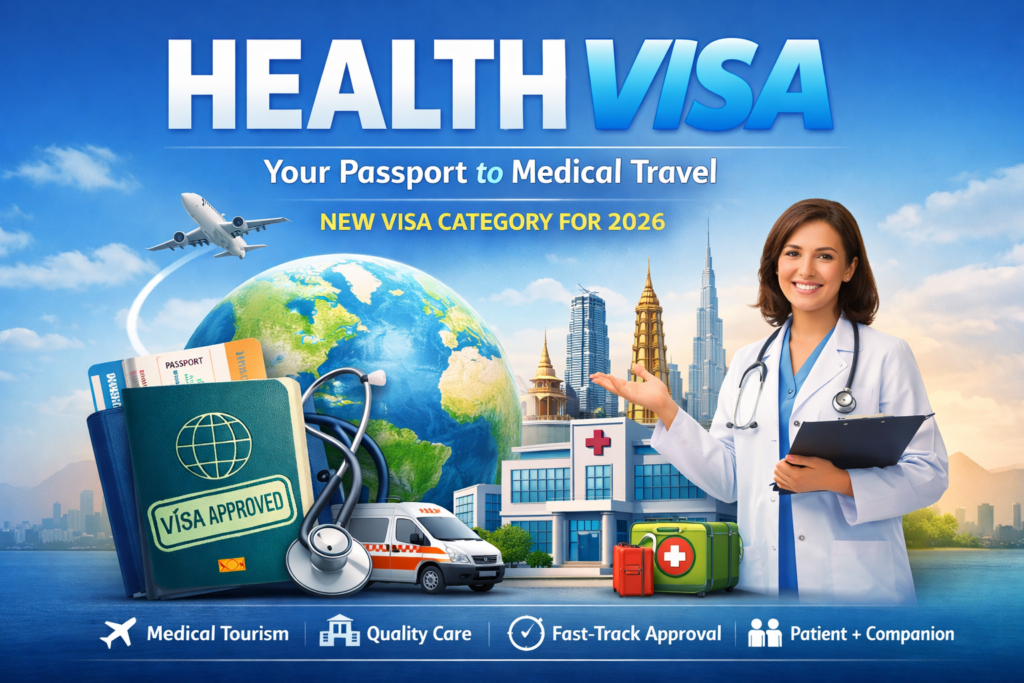
In an era where healthcare and mobility are increasingly interconnected, countries around the world are introducing innovative visa solutions to attract international patients. One of the most promising developments is the Health Visa, a specialized travel permit designed specifically for individuals seeking medical treatment abroad.
As global healthcare systems evolve and medical tourism continues to grow, the Health Visa is rapidly becoming a game-changer in international travel.
🏥 What is a Health Visa?
A Health Visa is a dedicated visa category that allows foreign nationals to travel to another country for medical treatment, wellness therapies, or specialized healthcare services. Unlike traditional tourist visas, this visa is tailored to meet the needs of patients, offering flexibility, faster processing, and extended stay options.
It is especially beneficial for those seeking:
- Advanced surgeries or treatments unavailable in their home country
- Affordable healthcare alternatives
- Specialized procedures with shorter waiting times
🌐 Why Countries Are Introducing Health Visas
Governments are recognizing the economic and reputational benefits of medical tourism. By launching Health Visa programs, countries aim to:
1. Boost Medical Tourism
Nations like India, Thailand, and Turkey have already built strong reputations as global healthcare hubs. Health Visas make access easier and more structured.
2. Strengthen Healthcare Infrastructure
International patients bring revenue that can be reinvested into improving hospitals, technology, and research.
3. Enhance Global Accessibility
Patients from developing regions can access world-class treatment without complex immigration hurdles.
✈️ Key Features of a Health Visa
The Health Visa is designed with patient convenience in mind. Common features include:
- Fast-Track Processing: Priority visa approval for urgent medical needs
- Extended Stay Duration: Allows sufficient recovery time post-treatment
- Multiple Entry Options: Useful for follow-up visits
- Attendant Visas: Permits family members or caregivers to accompany the patient
- Hospital Tie-Ups: Requires confirmation from accredited medical institutions
📋 Eligibility Requirements
While requirements vary by country, most Health Visa applications typically include:
- Valid passport with sufficient validity
- Medical diagnosis and treatment plan from a recognized hospital
- Proof of appointment or admission
- Financial proof or insurance coverage
- Recommendation from a licensed medical practitioner
💰 Cost and Processing Time
Health Visas are often priced competitively to encourage medical travelers. Some countries even offer discounted fees or expedited processing within 48–72 hours for critical cases.
In many cases, governments collaborate with hospitals to create all-inclusive medical travel packages, covering visa assistance, treatment, accommodation, and transport.
🌟 Top Destinations Offering Health Visas
Several countries are leading the way in implementing Health Visa programs:
- India – Known for affordable and advanced treatments, especially in cardiology and orthopedics
- Thailand – Popular for cosmetic surgery and wellness retreats
- Turkey – A hub for hair transplants and dental procedures
- UAE – Offering premium healthcare with cutting-edge facilities
- Germany – Renowned for high-quality medical expertise and complex procedures
⚠️ Challenges and Considerations
While the Health Visa offers many advantages, applicants should also consider:
- Verifying hospital accreditation and doctor credentials
- Understanding treatment costs and hidden expenses
- Checking visa extension policies
- Ensuring proper medical insurance coverage
🔮 The Future of Health Visas
As healthcare globalization accelerates, the Health Visa is expected to evolve further. Future trends may include:
- Digital Health Visa platforms for seamless applications
- Integration with telemedicine consultations before travel
- AI-driven patient matching with global specialists
- Partnerships between governments and private healthcare providers
✍️ Final Thoughts
The introduction of the Health Visa marks a significant shift in how countries approach both healthcare and international travel. By simplifying access to medical services across borders, this visa category not only saves lives but also fosters global collaboration in healthcare.
For patients seeking timely, affordable, and high-quality treatment abroad, the Health Visa could be the key to a healthier future, without borders.