
Canada has once again updated its immigration and work permit system and these reforms are reshaping how foreign nationals, students, families, and employers engage with opportunities to live and work in the Great White North. Whether you’re planning a career move, studying abroad, or helping a client navigate Canadian visas, here’s your complete, easy-to-understand guide to the new work permit reforms in Canada (2025–2026).
📅 Major Policy Shifts in 2025–2026
Canada’s immigration philosophy has shifted from rapid growth to controlled, strategic intake. The goal is to better balance labour market needs, protect local workers, and ensure meaningful opportunities for foreign talent while safeguarding public services and community integration.
Here are the most significant changes:
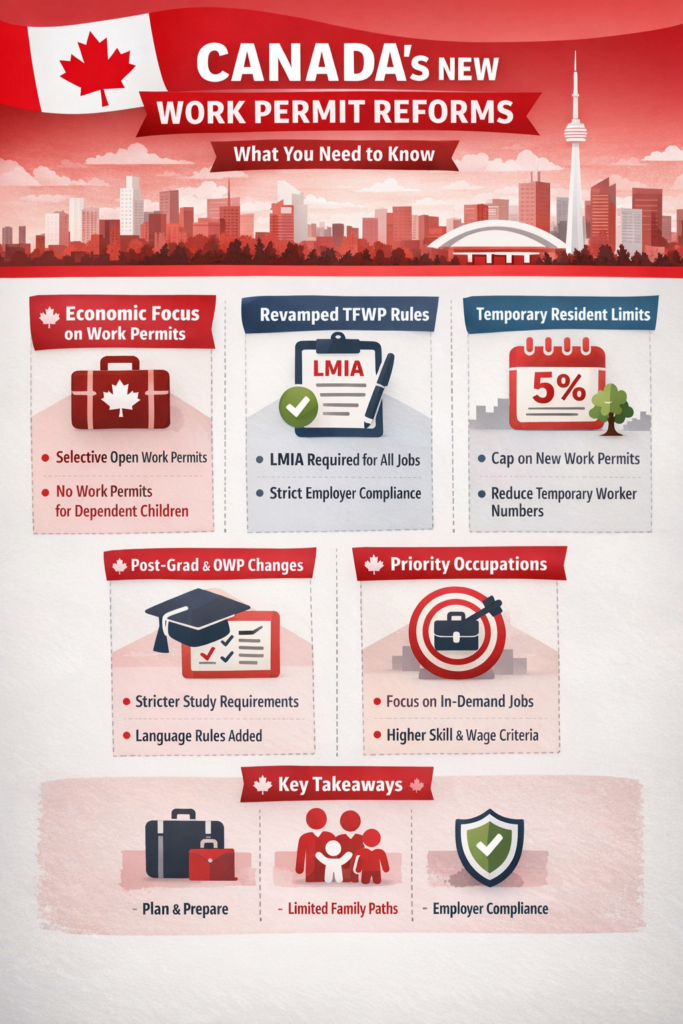
🔍 1. 🎓 Work Permit Rules Tied to Economic Priorities
Canada now designs work permit eligibility around labour market needs and national priorities:
- Open Work Permits for family members (like spouses) are now more selective. Eligibility mostly applies to spouses of international students in long-term or professional programs and to foreign workers in high-skill or priority occupations.
- This reform means dependent children no longer qualify for work permits under some family streams.
👉 Why this matters: The aim is to encourage work permit holders and their families to contribute meaningfully to the economy rather than simply accompany them without strong labour-market ties.
🧠 2. 🇨🇦 Temporary Foreign Worker Program Overhaul (TFWP)
The Temporary Foreign Worker Program — the main pathway for employer-supported work permits has been revamped.
📌 Key Changes:
- All work permit processing now relies on LMIA (Labour Market Impact Assessment), removing the previous wage assessment model under TFWP.
- Employers must secure LMIA approval before a foreign worker applies — meaning no more applications without a confirmed job offer and assessment.
- A new compliance fee and enforcement regime ensures employers follow the rules, with penalties for violations.
👉 Impact: These changes make the system more transparent and regulated, protecting both Canadian workers and foreign job seekers.
🧑💼 3. 🎯 Controlled Temporary Resident Levels
For the first time, Canada’s Immigration Levels Plan targets not just permanent residents but also temporary workers, aiming to reduce temporary resident share from roughly 7% to 5% of the total population by 2026.
This includes setting annual caps on new work permits and managing the number of temporary workers admitted each year — a big shift toward sustainability.
✈️ 4. 💼 Post-Graduation & Open Work Permits Adjustments
Canada has tightened rules around open work permits (OWPs) — especially impacting international students and their spouses:
- OWPs are more restricted for family members and students unless they meet certain education or job conditions.
- Some popular post-graduation pathways now require applicants to meet minimum language requirements and study in fields linked to Canadian labour needs.
📌 These reforms help Canada ensure temporary workers are aligned with skill shortages and economic priorities.
📈 5. 🏙️ Strategic Priority Occupations & Labour Market Alignment
The government has also taken steps to:
- Align work permit categories with in-demand occupations (like healthcare, tech, trades, etc.).
- Tie eligibility to skills and wages at or above local standards, especially for managerial roles and intra-company transfers.
This means higher-skilled professionals may find better work opportunities in Canada but the competition and documentation requirements are also more rigorous.
🏁 Final Thoughts: What Travelers & Applicants Should Know
✔️ Canada remains open to skilled foreign talent, but pathways are now more structured and demand proof of labour market value.
✔️ Family reunification paths are more narrow, focusing on quality of work and education rather than broad eligibility.
✔️ Temporary work permits now emphasize compliance and employer responsibility, improving protection for workers.
For job seekers, students, and families, the message is clear: planning, documentation, and aligning with Canada’s economic goals will be crucial to success in navigating the new work permit landscape.