
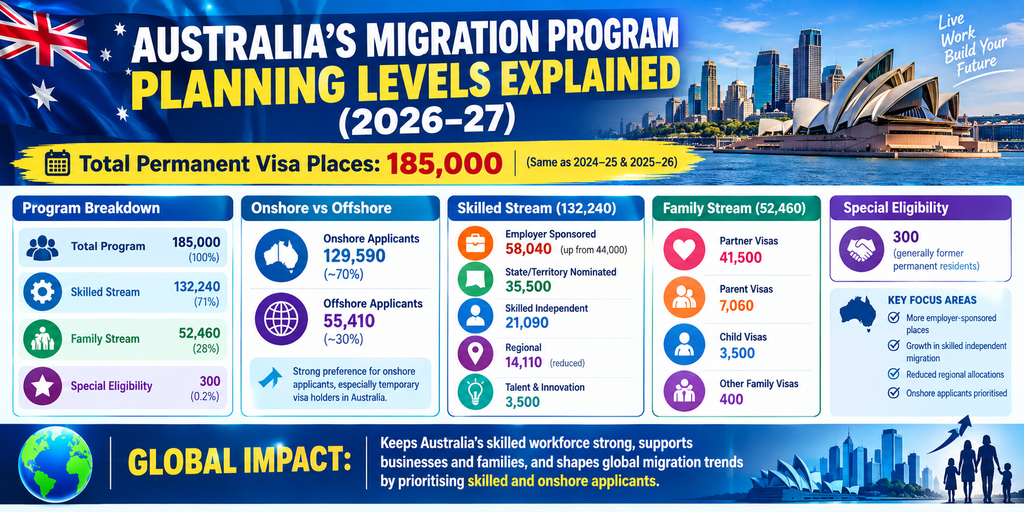
The permanent migration program for Australia for 2026–27, Australia skilled migration 2026-27, has arrived with a familiar headline figure but with a visibly different shape under it. For the fiscal year the Australian Government has set aside 185,000 permanent visa places. This is the number, as the last two years. The way those places are divided among different visa categories shows a more interesting situation than the total number alone would indicate.
Understanding this internal change is much more vital for potential immigrants, sponsoring companies, and families wishing to reunite in Australia than the unaltered count.
What Do Planning Levels Mean Exactly?
Before getting into the details it’s important to understand what these numbers really mean.. Planning levels for the Migration Program do not ensure that a certain number of visas will be approved. Rather, they provide the Government’s yearly plan, a collection of objectives that guide processing priorities, invitation rounds for skilled migration, and the general course of immigration policy for the year ahead.
In short, planning levels show where the Government intends migration outcomes to fall, even if the actual numbers change slightly.
The 2026–27 Program at a Glance
Australia’s announced new program, Australia skilled migration 2026-27, Family migration 2026-27 program, is in full swing. The software is split into three primary parts:
- Overall program: 185,000 locations
- Stream for skilled workers: 132,240 positions (about 71%)
- Family stream: 52,460 sites, or about 28%.
- Special Qualification: 300 spots
While the 70:30 split between skilled and family migration is not new, it has been the Government’s consistent approach for several years, it reinforces that economic migration continues to be the top priority.
An Increased Emphasis on Onshore Candidates
Perhaps the most revealing aspect of this year’s initiative is its significant bias toward individuals already residing in Australia. 129,590 of the total spaces are set aside for onshore candidates, leaving a somewhat smaller proportion for those applying from abroad; even then, the offshore allocation is weighted strongly toward extremely competent applicants.

This is not by coincidence. It mirrors a larger plan meant to:
- Assisting temporary visa holders to obtain permanent residency
- Reducing stress on net overseas migration numbers
- Maintaining migrants who are already working, learning, and helping the Australian economy
- For anybody presently living in Australia on a temporary visa, this onshore focus is possibly the most crucial information in the entire announcement.
Skilled Migration: The Direction of the Movement
Still supporting Australia’s migration strategy, the Skilled stream aims to address labour shortages and raise long-term economic output. Here is the distribution of the 132,240 qualified positions:
| Category | Places for 2026–27 |
|---|---|
| Employer Sponsored | 58,040 |
| State/Territory Nominated | 35,500 |
| Competent Independent | 21,090 |
| Regional | 14,110 |
| Talent & Innovation | 3,500 |
The number of jobs offered by employers went up a lot,this year. Year there were 44,000 of these jobs. This year there are 58,040. This big change shows that companies still need foreign workers to help with jobs that require skills. They need these workers because there are not people, in the country who can do those jobs. While Regional allocations have been much reduced, Skilled Independent visas have increased noticeably, implying a rethink of where the Government perceives the most demand.
Family Migration: Partners Still Take the Lead
The Family stream aims to maintain Australian families together; partner visas remain by far its most important element:
- Partner visas: 41,500 places
- Parent visas: 7,060 seats
- Child visas: 3,500 locations
- Other family visas: 400 positions
Partner visa applicants continue to account for the great majority of family stream seats, highlighting the critical nature of spousal and de facto partner reunions for this component of the program.
Special Eligibility: A Small Yet Significant Group
Three hundred places set aside for special eligibility concerns, typically former permanent residents looking to return to Australia under particular conditions, help to complete the program.
This Implies Going Forward
Though the headline number of 185,000 hasn’t changed, the internal rearrangement shows a clear image: employer-sponsored and independent skilled migration are given top priority; onshore candidates are progressively preferred over fresh offshore arrivals; and regional routes have taken a back seat this year.
For companies, this is a clear indication to start early their sponsorships plans, especially considering the rising budget for employer-sponsored visas. The onshore emphasis gives those already in Australia on temporary visas a real chance to seek permanent residency pathways earlier rather than later. Though the number of applications will still rely on demand across the larger program for families, partner visas provide the most dependable path to reunification.
From year to year, migration patterns can change, and knowing precisely where you stand can significantly impact your results. Getting personalized guidance early is among the most efficient ways to plan your next move with confidence if you’re considering a skilled, family, or employer-sponsored path under the 2026–27 settings.
For more Information contact your country regional embassy !