
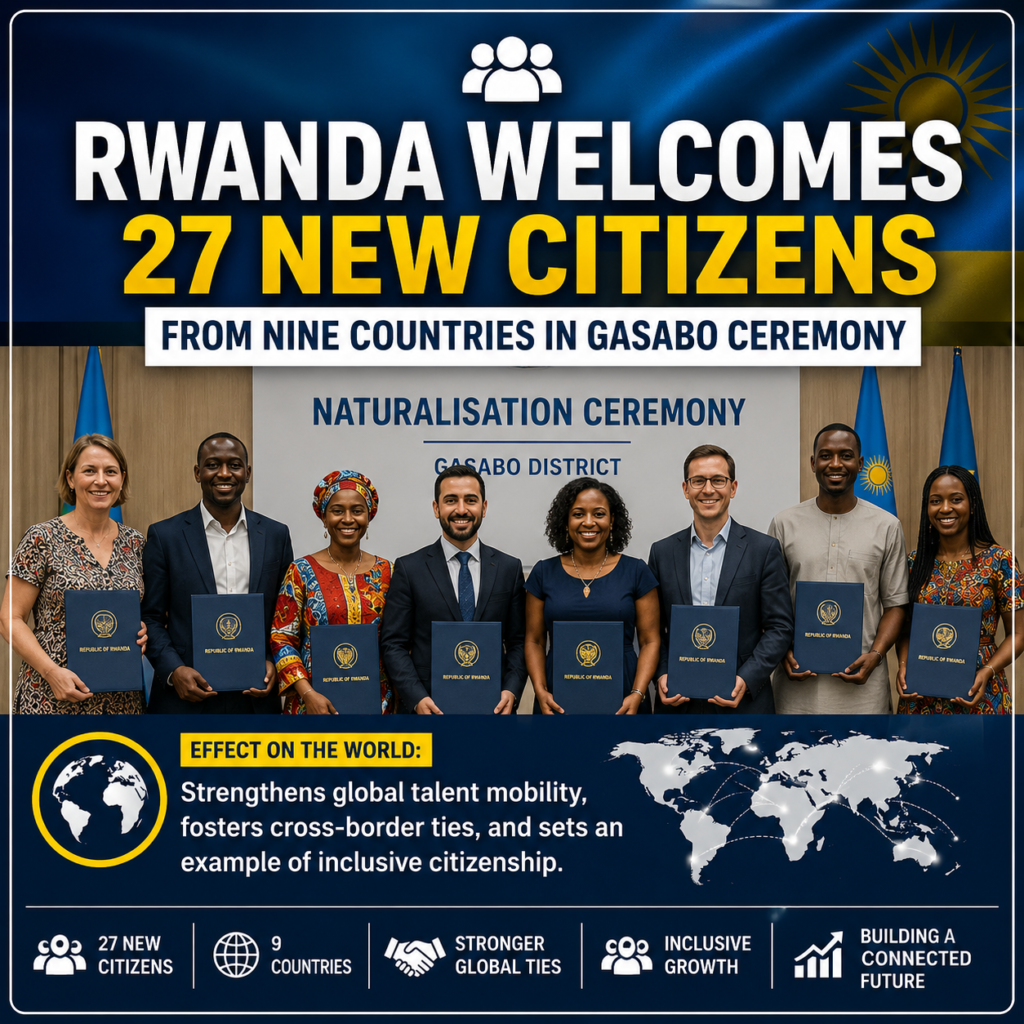
By adding 27 new names to its citizenship records this week, Rwanda’s neutralization policies has gained a significant number of foreign citizens from nine countries.
A Ceremony Years in the Making
For most of the 27 persons, Wednesday’s event was the result of a protracted administrative process as opposed to a snap choice. The naturalization process in Rwanda usually entails residency requirements, background investigations, documentation of connections to the nation, and, in many instances, an official letter detailing why the candidate merits citizenship. usually, by the time a person stands to take the oath, they have spent months or years meeting legal and administrative requirements established by the Directorate General of Immigration and Emigration.
Along with the immigration directorate, the local government of the Gasabo District planned Wednesday’s ceremony, a co-operational pattern that has grown rather typical for these occasions. While the immigration directorate manages the legal certification that makes the citizenship official, district authorities often host the processes as many naturalization ceremonies occur near to where new citizens really live and work.
Where the New Citizens originate
Of the 27 people who took the oath, those came from among a particularly diverse group of countries: Belgium; Burundi; Cameroon; Democratic Republic Congo; Eritrea; France; Kenya; Uganda; and United States. “. That spread mirrors two distinct currents fueling Rwanda’s naturalization numbers. On the one hand, there are people from nearby East and Central African countries like Burundi, the DRC, Uganda, and Kenya. Many of them have strong ties to the area, family connections across borders, or have lived in Rwanda for a long time as part of the country’s long history of migration within the Great Lakes region. On the other hand, there are people from far away countries like Belgium, France, and the United States, a group that usually consists of investors, professionals, Rwandans who have returned to their home country, or people who married Rwandan citizens and made their lives in the country.
Why Rwanda Is naturalizing More Foreign Nationals
This ceremony isn’t just a stand-alone occasion. Rwanda has systematically increased the legal channels whereby immigrants could obtain citizenship. A 2021 nationality legislation and a later 2022 ministerial directive expanded the basis for naturalization far beyond the marriage, birth, or descent paths. Today, foreigners are able to seek Rwandan citizenship on the basis of long-term residency, marriage to a Rwandan, investment or sustainable business activity, special talents or skills that benefit the nation, statelessness, or shown national interest, a category that can encompass exceptional contributions to Rwandan society.
This legal structure has resulted in a regular drumbeat of naturalization rituals all throughout the nation. For instance, Rwanda awarded citizenship to 105 individuals from 27 different nations in a single batch registered via the Official Gazette earlier this year, with the majority of new citizens falling between the ages of 30 and 49, an age group the government has expressly identified as having great potential for social and economic contribution. Rwanda has accepted around 1,500 foreign nationals as citizens since its contemporary naturalization program started, highlighting how regular and intentional this process has grown to be.
A Note of Accountability, Not Merely Reward
The message given to the new citizens following Wednesday’s ceremony was less about the paperwork and more about the ceremony itself. Officials took use of the event to remind the group that Rwandan citizenship entails obligations in addition to rights. The government’s more general emphasis on citizenship as something acquired through effort rather than merely given as a legal formality was reflected in the encouragement for the new citizens to actively engage in the social and economic growth of the country and to take seriously the civic duties that came with their new status.
The agreement provides an extra benefit for Kenyan citizens, particularly those in the group: Rwanda’s dual nationality regulations, which have been in place since 2003, allow them to obtain a Rwandan passport without giving up their original citizenship.
What This Says About How Rwanda Views The World
Though modest in size, events such as this one are symbolically important. Rather than seeing citizenship as a strictly inherited condition, they reflect a nation actively pursuing international talent, capital, and diaspora links via its immigration policy. Expect these naturalization ceremonies to remain a regular feature of the nation’s civic calendar as Rwanda continues to position itself as a regional hub for technology and commerce, each adding a few new names and new obligations to Rwanda’s national narrative.
For more Information contact or visit your country embassy for further updates.