
In a significant move aimed at tightening migration controls, the government of Canberra has announced a sharp increase in the cost of post-study work visas. The policy change comes as authorities seek to address what they describe as growing “integrity risks” within the international education and migration system.
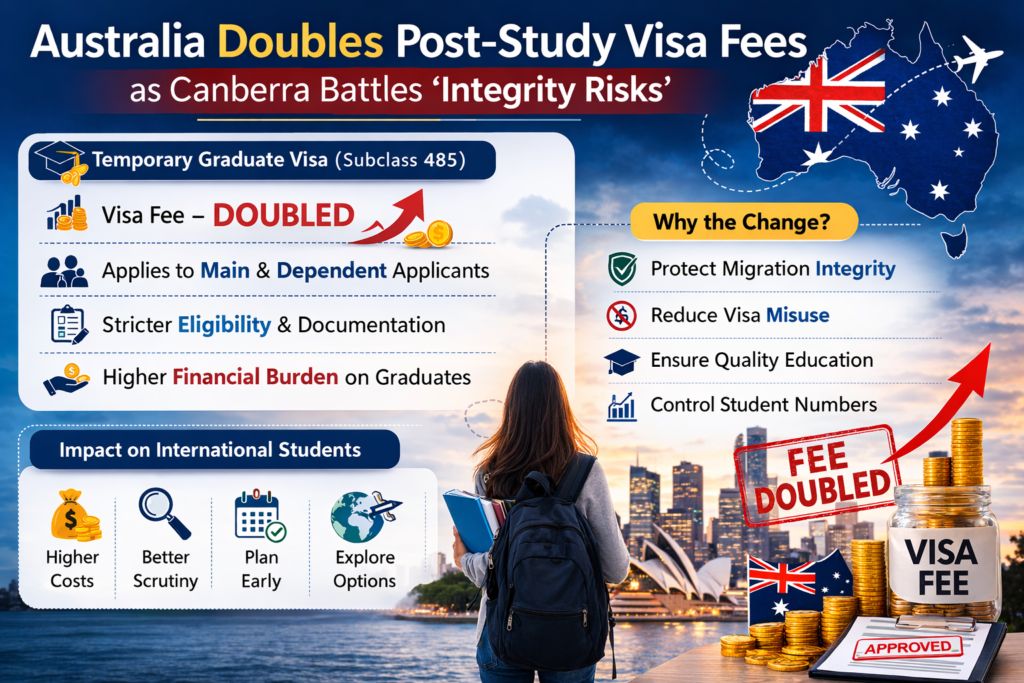
For thousands of international graduates hoping to gain professional experience in Australia, the new visa fee structure could reshape post-study plans and financial considerations.
Why Australia Increased Post-Study Visa Fees
The policy affects applicants of the Temporary Graduate Visa (subclass 485), which allows international students who have completed their studies to remain in Australia temporarily and gain work experience.
According to the Australian Department of Home Affairs, the fee increase is part of a broader strategy to maintain the integrity of the country’s migration system. Authorities have raised concerns that some education pathways are being used primarily as a backdoor route to long-term migration rather than genuine academic development.
The government argues that stricter financial and regulatory measures will discourage misuse of student visas while ensuring that genuine graduates continue to benefit from the program.
New Visa Fee Structure
Under the revised policy:
- Application fees for the Temporary Graduate Visa (Subclass 485) have doubled compared to previous years.
- Additional charges for dependents and secondary applicants have also increased.
- Applicants must still meet requirements such as English proficiency, health insurance, and skills relevant to their degree.
These changes place the visa among the more expensive post-study work permits globally.
Impact on International Students
Australia remains one of the world’s most popular study destinations alongside countries such as Canada, United Kingdom, and New Zealand. However, higher visa costs may influence how prospective students plan their education and migration pathway.
Key potential impacts include:
1. Higher Financial Planning Requirements
International graduates will need to allocate more funds for post-study work visas, increasing the overall cost of studying in Australia.
2. Stricter Migration Screening
Authorities expect the move to reduce misuse of student pathways by ensuring that applicants are genuinely interested in education and skilled employment.
3. Competition with Other Study Destinations
Countries offering affordable or flexible post-study work options may attract students who previously considered Australia.
Australia’s Broader Migration Reforms
The fee hike is part of a wider reform agenda aimed at improving migration quality and controlling rapid growth in international student numbers.
Recent measures include:
- Stricter English language requirements for student visas
- Increased scrutiny of education providers
- Measures to reduce “visa hopping” between temporary visas
- Tighter monitoring of institutions with high visa refusal rates
The government believes these steps will strengthen Australia’s reputation as a destination for high-quality international education and skilled migration.
What International Graduates Should Do
Students planning to stay in Australia after graduation should consider the following:
- Prepare financially for the higher visa application costs
- Ensure all documentation and eligibility criteria are met before applying
- Seek professional immigration guidance if unsure about the process
- Explore alternative visa pathways if long-term migration is the goal
The Future of Post-Study Work in Australia
Despite higher costs, the Temporary Graduate Visa remains an important bridge between education and skilled employment in Australia. For many international students, the opportunity to gain work experience in a strong economy still outweighs the increased financial burden.
However, as migration policies evolve, students and education providers will need to adapt to a system that places greater emphasis on quality, compliance, and long-term economic contribution.
The decision by Australia to double post-study visa fees reflects a growing global trend: governments are increasingly balancing the economic benefits of international students with the need to protect migration systems from abuse.
For prospective graduates, staying informed about policy changes and planning early will be essential to successfully navigating the new visa landscape.