
What Travelers Need to Know
Travelers around the world are closely watching a major shift in European visa policy that could reshape how frequent visitors access the Schengen Area. The European Union (EU) is considering extending the validity of multiple-entry Schengen visas beyond the long-standing five-year maximum, a change that could dramatically simplify travel for business professionals, repeat tourists, and trusted globetrotters.
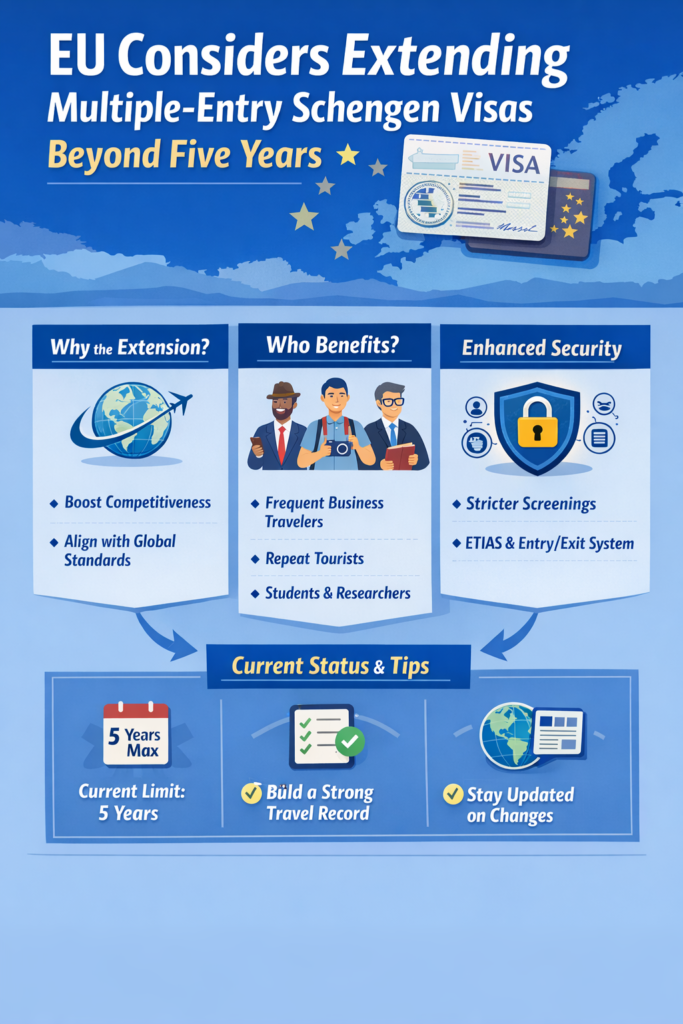
Why the Change Is Being Proposed
Under today’s rules, travelers from visa-required countries can be issued a multiple-entry Schengen visa valid for up to five years, allowing them to enter and exit the 27-nation Schengen Zone on short stays (maximum 90 days within any 180-day period) without reapplying each time.
However, this five-year cap does not exist in many other major travel systems, for example, the United States and Canada already offer long-term multi-entry visas exceeding five years to eligible applicants. To stay competitive as a global destination for tourism, study, business, and investment, EU policymakers now want to rethink the status quo.
European Commission proposals introduced in early 2026 aim to build a new visa policy strategy that would allow certain vetted travelers, often called “bona fide” or “trusted” visitors, to receive multiple-entry visas lasting longer than five years. This change is part of a wider plan to modernize and harmonize visa rules across member states.
Who Could Benefit from Longer Visas
While these plans are still under discussion and must be agreed by the European Parliament and EU member states before taking effect, the focus is on reducing administrative hurdles for travellers with strong compliance histories. Potential beneficiaries could include:
- Frequent Business Travelers: Entrepreneurs and professionals who make repeated short-term trips across Europe.
- Tourists with Strong Visa Histories: Visitors who have used former Schengen visas responsibly without overstays or violations.
- Students, Researchers, and Academics: Individuals who require regular travel across borders for conferences, seminars, and academic work.
The proposed shift could make travel planning more predictable and reduce the need for repeated visa applications, which often involve time, cost, and logistical burdens.
Stronger Security Goes Hand-in-Hand
It’s important to note that this proposal isn’t just about convenience. Longer visas will likely be coupled with enhanced security screenings and digital processing improvements, including broader use of systems like the Entry/Exit System (EES) and the upcoming European Travel Information and Authorisation System (ETIAS). These technologies help authorities better track arrivals and departures and identify potential risks.
What This Means for You Now
At present, nothing has changed in the official Schengen Visa Code: multiple-entry visas still cannot exceed five years under EU law. But if the new strategy is adopted, eligible travelers with proven records could soon enjoy even longer visa validity, a welcome development for frequent visitors to Europe.
Here’s what you can do in the meantime:
✅ Build a strong travel history: Repeated lawful use of Schengen visas can improve your chances of qualifying for longer-term visas under current rules.
✅ Plan ahead: Even with a five-year visa, remember the 90/180-day stay limit applies, so plan your stays strategically.
✅ Stay informed: Visa policy is still evolving; keep an eye on official EU announcements and updates from your local consulate.
Final Thoughts
If approved, extending multiple-entry Schengen visas beyond five years would mark a significant shift in EU travel policy, one that balances traveler convenience with enhanced security measures. For global citizens, digital nomads, business travelers, and culture enthusiasts, this could open a new chapter of easier mobility across European borders.
Stay tuned, Europe’s visa policies are on the move!