
What You Need to Know in 2026
The U.S. H-1B work visa, a key pathway for skilled foreign professionals in fields like technology, engineering, and healthcare, is undergoing one of its most significant overhauls in years. With updates to the lottery system, registration process, and fee structure, employers and applicants worldwide are facing a new immigration landscape that emphasizes wage levels, skill priorities, and economic interests.
1. Goodbye to the Traditional Random Lottery
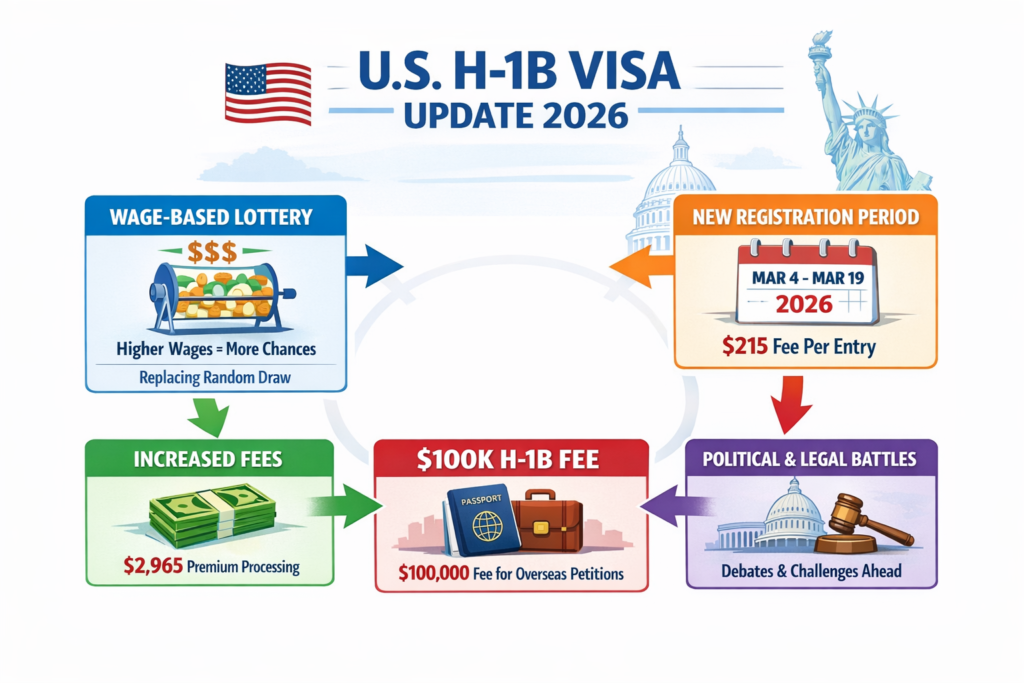
Perhaps the most transformative change is the elimination of the longstanding random computer-draw lottery that has governed H-1B visa allocation for decades. Starting with the Fiscal Year (FY) 2027 cap season, which officially begins with registrations in March 2026, the U.S. Citizenship and Immigration Services (USCIS) will replace pure chance with a wage-weighted lottery system.
Under the new process, every electronic registration submitted by an employer will receive multiple “entries” in the selection pool based on the wage level offered to the worker. Higher wages earn more entries, increasing the odds that an application will be selected for further processing.
In practice:
- Entry-level wage positions get fewer entries,
- Mid-level roles get moderate weighting,
- High-paid and highly specialized roles are favored with more entries.
This shift is designed to better align with the intent of the H-1B program prioritizing highly skilled and fairly compensated workers, while discouraging filings centered on low wages and speculative applications.
2. Updated Registration Timeline and Requirements
The registration period for the FY 2027 H-1B cap will run from March 4 to March 19, 2026, with a $215 registration fee per beneficiary. Employers must provide additional details during registration, including occupational classifications and job location information, to support the wage-based weighting system.
Notifications of selection are expected to be issued by March 31, 2026 — later triggering the formal petition filing window.
This evolution marks another milestone in modernizing the H-1B program, elevating transparency and tying chances of selection more directly to job quality.
3. Higher Fees and Economic Safeguards
In addition to changes in selection mechanics, the U.S. government has introduced other economic provisions:
- H-1B Premium Processing Fee Increase effective March 1, 2026, the premium processing fee for H-1B petitions is raised to $2,965, adjusting for inflation and administrative costs.
This means faster adjudication remains available, but at a slightly higher cost, something employers should budget for as part of their hiring strategy.
4. Controversial $100,000 Fee Proposal
A major policy shift introduced in late 2025 continues to generate debate: a $100,000 fee imposed on new H-1B petitions for workers outside the United States. This fee was instituted under a presidential proclamation aimed at restricting entry and incentivizing higher wages, directing the Department of Labor and Homeland Security to update wage and lottery practices.
While this fee does not apply to visa extensions or status changes for workers already inside the U.S., it has raised concern among employers and global job seekers due to its potential financial impact.
5. Political Debate and Legal Challenges
The H-1B program’s future remains politically charged. In early 2026, a new bill was introduced in the U.S. Congress that would entirely eliminate the H-1B program by the year 2027, citing concerns over exploitation and job displacement for American workers.
Critics argue such a move would harm industries reliant on global talent, especially technology and research sectors, while supporters frame it as a way to prioritize domestic employment.
At the same time, some of the new regulatory changes, particularly the weighted lottery rule are expected to face legal challenges from advocacy groups and business coalitions.
Important Tips
📅 1. Start Early, Don’t Wait for March
The registration window is limited (typically early to mid-March). Employers should begin preparations months in advance:
- Conduct wage and job role analyses early to assign the correct wage level.
- Gather required documents and draft the petition well before the registration period opens.
⏱️ Why it matters: Missing the registration window means waiting another year, a costly delay for both workers and companies.
💰 2. Optimize the Offered Salary
Under the new wage-weighted system:
- Wage Level IV roles receive the highest number of lottery entries.
- Wage Level III and II get moderate increases.
- Wage Level I (entry-level) gets only one entry.
Including a competitive wage that matches the highest prevailing wage level justified for the role can significantly increase the odds of selection. But be careful:
The wage offered must be defensible USCIS may issue Requests for Evidence (RFEs) or deny petitions if the wage level doesn’t align with the job duties and location.
📋 3. Prepare a Strong, Detailed Petition
A well-organized petition can make a big difference once the case is selected:
a. Clear and Precise Job Description
- Quantify duties and link them directly to specialized knowledge.
- Focus on how the role requires a bachelor’s degree or higher in a relevant field.
b. Consistent Documentation
- Ensure all documents (LCA, SOC code, job offer letter, credentials) match perfectly.
- Inconsistencies are one of the most common reasons for RFEs or denials.
c. Supporting Educational Evidence
- Include transcripts, credential evaluations (for foreign degrees), and proof of relevant work experience.
🧑⚖️ 4. Work With Experienced Immigration Counsel
Specialist immigration attorneys can:
- Evaluate job roles and wage levels accurately.
- Prepare the petition to withstand USCIS scrutiny.
- Help avoid common pitfalls that cause delays or denials.
💡 Pro tip: Good counsel also helps with alternative strategies if your primary H-1B case isn’t selected — like other visa types or earlier green card pathways.
🧠 5. Understand and Plan for the New Weighted Lottery
Under the new rules, wage level matters a lot:
- Level IV roles get more chances in the selection pool.
- Level I roles, especially entry-level are less advantaged.
So your hiring strategy should tie into immigration planning, not treat visa filing as an afterthought.
🛂 6. Consider Backup or Parallel Visa Options
Because selection is not guaranteed:
- Explore alternatives like O-1 (extraordinary ability), L-1 (intra-company transfer), or other employment-based visas.
- Plan for long-term goals, such as employment-based green card sponsorship, which can offer more stability.
Having a Plan B can protect your career trajectory if the H-1B route falls through.
📞 7. Communicate and Coordinate With Your Employer
Successful petitions happen when:
- Applicants and employers are aligned on expectations.
- You provide requested documents quickly and clearly.
- The employer understands the regulatory timeline and requirements.
Good communication reduces stress and increases the likelihood of a strong petition.
The U.S. H-1B visa program in 2026 is no longer just about luck. With a shift toward wage-based selection, updated fees, and targeted policy reforms, the process is becoming more strategic and tied to economic priorities. Whether you’re an employer, a tech professional, or an international graduate considering an H-1B petition, understanding these changes is essential to navigating the coming visa cycles with confidence.