
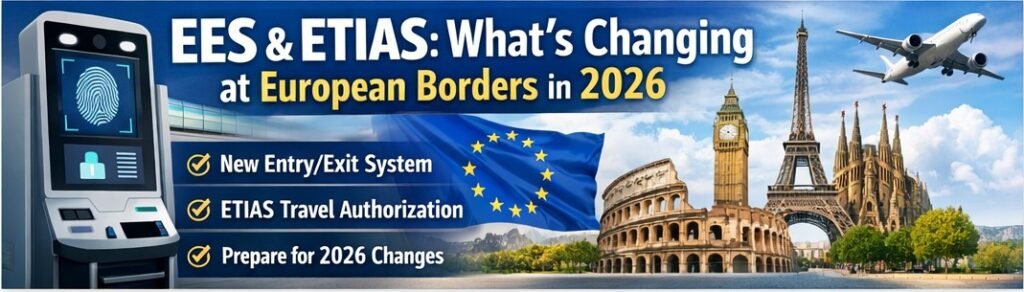
Europe Is Transforming Border Control
Beginning in 2025 and into 2026, Europe is updating its border control systems with two major digital tools: EES (Entry/Exit System) and ETIAS (European Travel Information and Authorisation System). These systems will affect most international travelers — especially those from visa-free countries.
📌 What Is EES (Entry/Exit System)?
EES (Entry/Exit System) replaces the traditional passport stamp at European borders. Under EES:
- Passport scans and biometric data (fingerprints + facial image) are recorded.
- Entry and exit dates are logged digitally.
- Overstay monitoring becomes automated.
Why EES Matters for Travelers
✅ Faster border processing
✅ Fewer manual passport checks
✅ Accurate tracking of your stay in Europe
Travel Tip: No more ink stamps — your passport will be digitally registered each time you enter or exit the Schengen Area.
🌐 What Is ETIAS?
ETIAS (European Travel Information and Authorisation System) is not a visa — it’s a travel authorization required before you travel to Europe if you are from a visa-exempt country.
Key Points About ETIAS
- Online application with basic personal and passport info
- Small processing fee (one-time per authorization)
- Approval usually within minutes
- Valid for up to 3 years or until your passport expires
ETIAS must be approved before you book or board your trip, airlines and carriers will check ETIAS status before departure.
🚶♂️ Who Needs EES and ETIAS?
✈️ EES Requirement
Everyone who enters the Schengen Area from outside:
- Visa-exempt nationals (e.g., USA, UK, Canada)
- Visa-required nationals
→ Both groups must be recorded in the EES at each border crossing.
🌍 ETIAS Requirement
Only citizens of visa-free countries.
Examples include:
- United States passport holders
- United Kingdom passport holders
- Japanese, Australian, Canadian citizens
Visa-required travelers (e.g., Indian, Pakistani) still need a Schengen visa, not ETIAS.
🧳 How to Apply for ETIAS
Here’s a step-by-step ETIAS application guide:
- Visit the official ETIAS portal
- Complete the online form (name, passport, travel info)
- Pay the ETIAS fee securely
- Receive email confirmation
- Print or save your ETIAS authorization
Pro Tip: Apply at least 72 hours before departure to avoid delays.
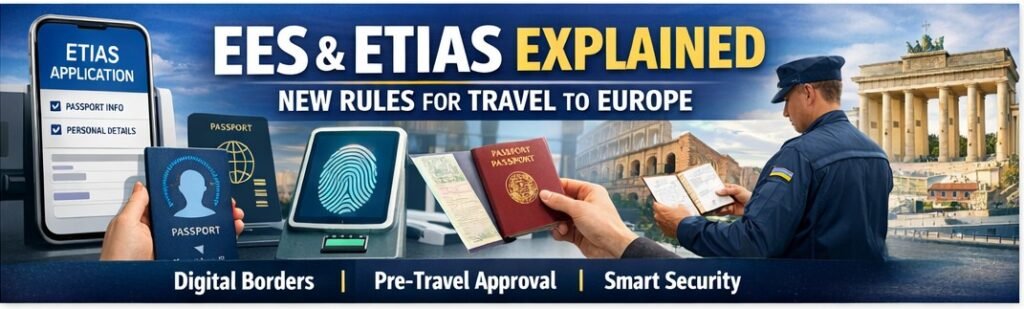
🧐 How EES and ETIAS Will Change Travel
⏱ Faster Border Checks
Automated identity and biometric systems speed up entry and exit.
🔒 Enhanced Security
Cross-checked biometric and travel data reduce identity fraud and overstays.
🛫 Travel Planning
ETIAS authorization must be obtained in advance — like the US ESTA — so add it to your travel checklist.
📈 Benefits for Travelers
- Less time at borders
- More accurate entry/exit tracking
- Reduced risk of accidentally overstaying
- ETIAS approval gives confidence before you fly
💡 Travel Checklist for Europe 2026
✔ Valid passport with at least 6 months beyond travel dates
✔ ETIAS authorization (for eligible travelers)
✔ Familiarity with EES easy entry process
✔ Travel insurance and itinerary details
📍 Final Thoughts: Smarter Borders = Better Travel
Europe’s shift to EES and ETIAS is a major modernization of border control. It’s designed to help both travelers and authorities: reducing wait times, increasing security, and making travel more predictable.
Whether you’re planning a European city tour, a backpacking adventure, or a business trip, understanding these changes will save you time and stress.
✈️ Ready to go? Make ETIAS part of your travel plans, and enjoy smoother border crossings into Europe!
🗓️ When Will EES and ETIAS Start?
| System | Launch Timeline | Requirement |
|---|---|---|
| EES | Rolled out in 2025; fully active by early 2026 | Required at all external European borders |
| ETIAS | Expected operational phase in late 2026 | Mandatory before travel for visa-free nationals |